
Introduction
The rise of autonomous vehicles (AVs) is transforming the transportation industry at a rapid pace. With companies like Tesla, Waymo, and Uber investing billions in self-driving technology, the world is moving towards a future where driverless cars dominate the roads.
But beyond just convenience, autonomous vehicles present massive business opportunities in sectors like ride-hailing, logistics, and mobility services. Let’s explore how entrepreneurs can capitalize on this revolutionary shift.
How Autonomous Vehicles Are Changing the Industry
✔️ Reduced Human Error – AI-powered driving minimizes accidents caused by human mistakes.
✔️ Lower Operating Costs – Businesses save on fuel, insurance, and driver salaries.
✔️ Increased Efficiency – AVs optimize traffic flow and reduce congestion.
✔️ Eco-Friendly Impact – Most AVs will be electric, reducing carbon emissions.
According to Allied Market Research, the global AV market is expected to exceed $2 trillion by 2030, making it one of the most lucrative industries of the future.
Top Business Opportunities in the Autonomous Vehicle Market
1. Self-Driving Taxi & Ride-Sharing Services
✔️ Fully autonomous taxis can operate 24/7, cutting labor costs.
✔️ Companies like Waymo and Cruise are already testing robotaxis in major cities.
✔️ Entrepreneurs can launch localized AV ride-hailing services in urban areas.
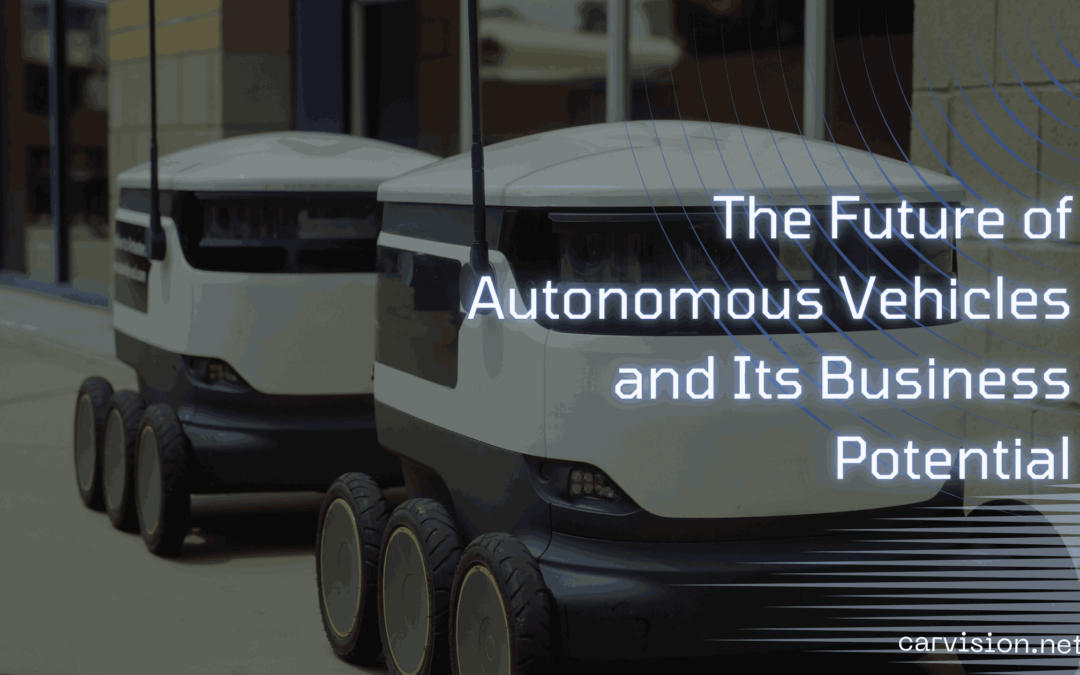
2. Autonomous Delivery & Logistics
✔️ Self-driving trucks reduce delivery costs and improve supply chain efficiency.
✔️ Drone deliveries & automated last-mile solutions are gaining traction.
✔️ Major retailers like Amazon and Walmart are exploring driverless delivery services.
3. AI-Powered Mobility Solutions
✔️ Develop AV rental or subscription models for businesses & individuals.
✔️ Offer corporate fleets for companies seeking cost-effective transportation.
✔️ Integrate AVs with smart cities for optimized traffic and public transport.
4. Autonomous Public Transport
✔️ Cities are investing in driverless buses and shuttles to improve urban mobility.
✔️ Companies can develop software & infrastructure for smart public transit.
✔️ AVs could revolutionize accessibility for disabled and elderly passengers.
5. AV Software & Data Monetization
✔️ Develop AI-based driving algorithms and sensor systems for manufacturers.
✔️ Sell real-time traffic and road condition data to navigation platforms.
✔️ Create autonomous fleet management software for logistics firms.
Challenges & Barriers to Adoption
✔️ High Development Costs – AV technology requires massive R&D investment.
✔️ Regulatory Uncertainty – Governments are still defining AV safety standards.
✔️ Public Trust & Safety Concerns – Consumers remain skeptical of driverless cars.
✔️ Cybersecurity Risks – AVs require strong data protection to prevent hacking.
Despite these hurdles, advancements in AI, 5G connectivity, and vehicle-to-infrastructure (V2I) technology will drive widespread AV adoption.
Conclusion
The future of autonomous vehicles is full of groundbreaking opportunities for businesses. Whether through self-driving taxis, automated logistics, or AV software development, entrepreneurs who invest early in this space stand to gain massive rewards.